
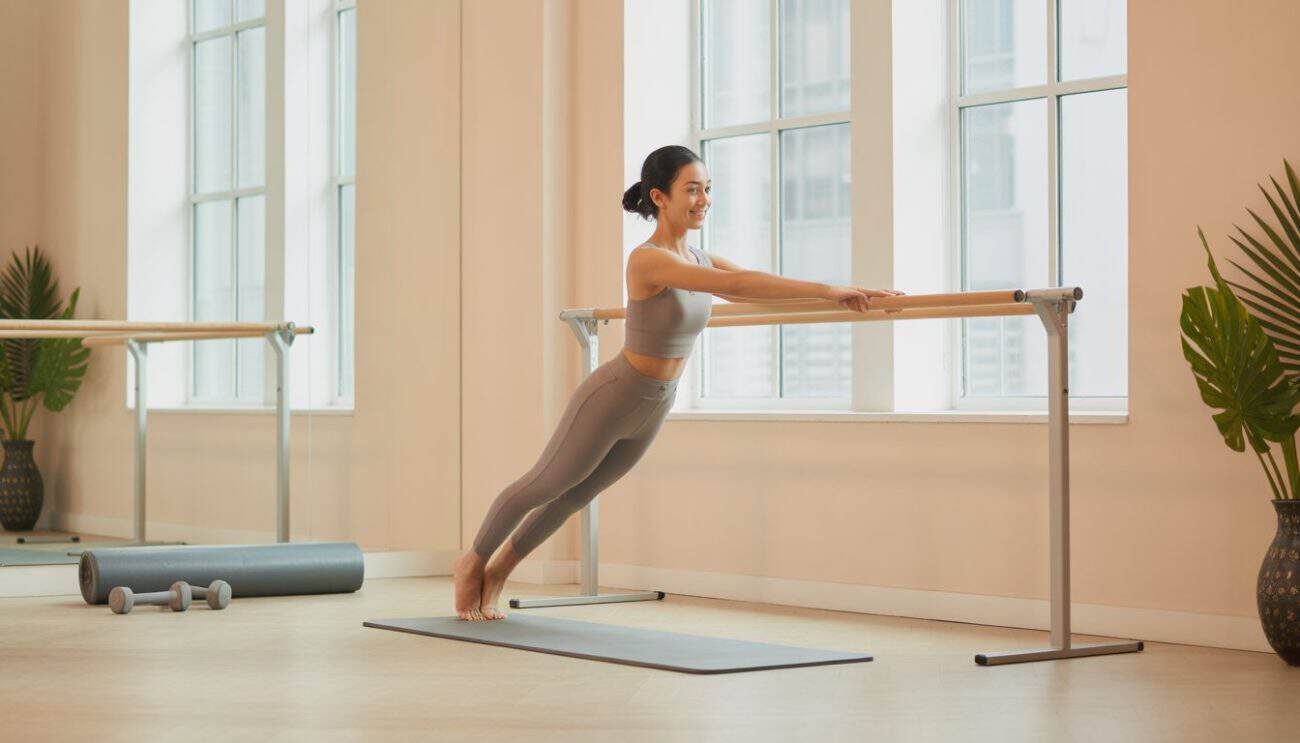
What is Barre Pilates?
Barre pilates is a gentle, low-impact workout that blends the tiny, controlled movements of Pilates with the balance and posture-focused work done at a ballet barre. If you’re new to both disciplines, think of it as a fusion class that targets core strength, posture, and long, lean muscles without heavy weights.
Origins and basics
Barre and Pilates come from different lineages: Pilates was developed in the early 20th century to improve core control and body awareness, while barre classes borrow principles from ballet training. Barre pilates takes the best of both — precision, breath, and alignment from Pilates plus standing balance and small isometric pulses from barre.
How it combines barre and pilates
In a barre pilates class you’ll alternate between mat-based core work and standing sequences at the barre or using a chair at home. Expect lots of high-rep, small-range movements, paired with mindful breathing. That combination trains endurance and stability rather than brute strength, so you feel challenged but not battered.
Benefits for beginners
This style is excellent if you’re a beginner who wants a workout that’s effective without being intimidating. It’s accessible, adaptable, and works well alongside walking, running or other sports.
Physical benefits
You’ll build a stronger core, improve posture, and increase muscular endurance in hips, thighs and shoulders. Because movements are controlled and small, barre pilates reduces impact on joints while still giving you a full-body burn.
Mental and lifestyle benefits
Beyond physical gains, the focus on alignment and breath helps you become more aware of how you hold your body during daily tasks. Many people report reduced tension in the neck and lower back and a calmer, more focused mind after regular classes.
How to start: classes, equipment, and choosing the right provider
Starting is easier than you think. You don’t need fancy kit to begin — a mat, a stable chair and optional small weights or a resistance band will do. The main decision is whether to join a class or practice at home.
Finding classes (including LA Pilates)
Look for beginner-friendly classes labelled barre pilates or “barre fusion”. If you’re in a big city, you might come across branded options like “LA Pilates,” which sometimes refers to a particular studio’s take on Pilates and barre fusion. When you try a new studio or an LA Pilates class, check that instructors cue alignment clearly, offer modifications, and keep class sizes manageable.
Essential equipment and at-home setup
At home, you only need a non-slip mat and a stable chair or countertop to use as a barre. A light pair of hand weights (1–3 kg) or a resistance band is useful but optional. Wear comfortable, form-fitting clothes so your instructor (or your own mirror) can help you adjust alignment.
Sample beginner session and practical tips
Here’s a short 10-minute starter routine you can try to get a feel for barre pilates. Do each move slowly and pay attention to breath and alignment.
10-minute sample routine
1) Warm-up (1 minute): March in place with tall posture, inhaling for two counts, exhaling for two counts. 2) Standing plié pulses (2 minutes): Hold the back of a chair, feet hip-width, toes turned slightly out. Bend knees into a shallow plié and pulse 20–25 times. 3) Standing leg lifts (2 minutes): Balance on one leg and lift the other to the back in small pulses for 30–45 seconds, then switch. 4) Core series on mat (3 minutes): Pelvic tilts (30 seconds), single-leg stretch (30 seconds per side), and a modified plank (30 seconds). 5) Cool-down stretch (1–2 minutes): Seated hamstring stretch and gentle spinal twists while breathing deeply.
Safety tips and common mistakes
Start slow and prioritise form over range of motion. Common mistakes include gripping shoulders up by the ears, overarching the lower back during lifts, or holding the breath. If you have any existing injuries, mention them to the instructor before class. Pregnant or postpartum? Look for classes or modifications specifically for you.